The Truth About eco AI: Verified Metrics for Mindful Tech Use
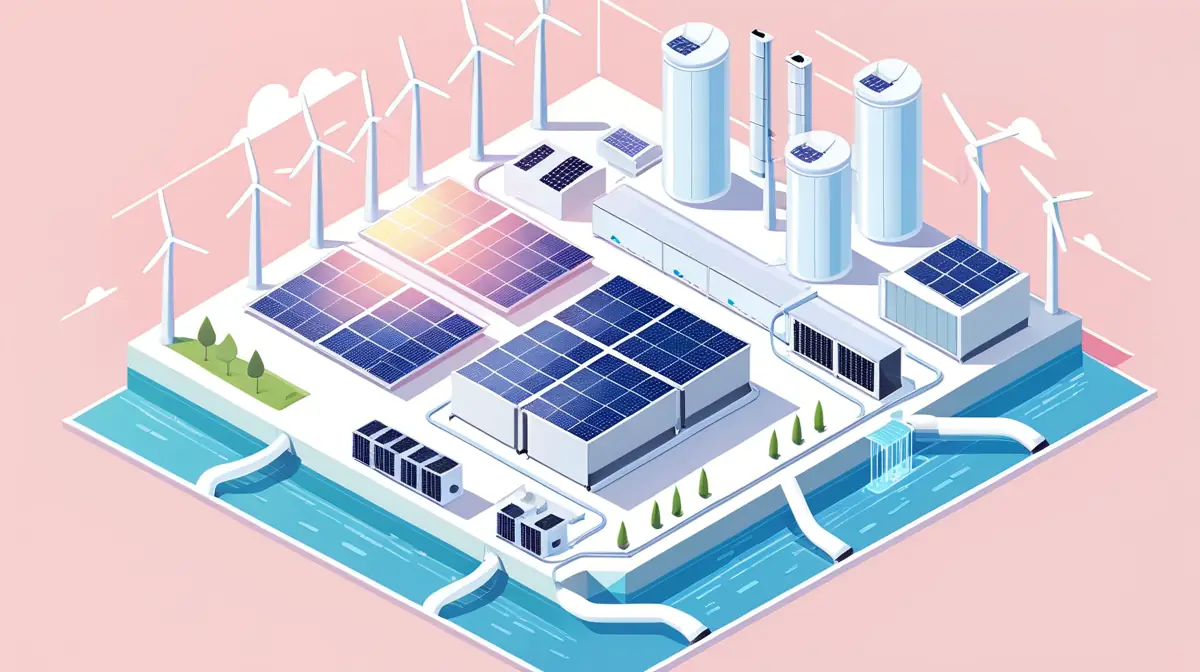
You use AI daily, but have you wondered what that actually costs the planet? Beyond the “invisible cloud”, every query draws real energy, real water, and real infrastructure. This article cuts through the noise with verified 2024-2026 data on AI’s hidden footprint, then gives you pragmatic, low-stress habits to use these tools without the eco-guilt. No perfectionism. No preachiness. Just transparent metrics, relevant context, and actionable steps that fit your routine. Let’s align your digital habits with the sustainable future you’re already building.
Why AI’s Environmental Footprint Isn’t Just About Electricity?
When we talk about the environmental cost of AI, it’s easy to picture a single server rack humming in a dark room, drawing power from the wall. That mental shortcut is understandable. We’ve spent years treating digital tools as “weightless”, which makes it tempting to assume their impact stops at your monthly electricity bill. But the reality is far more physical, and acknowledging that complexity is the first step toward using these tools without the eco-guilt spiral. AI doesn’t just consume electricity. It relies on a sprawling, resource-intensive infrastructure that touches manufacturing, global logistics, municipal water systems, and urban heat dynamics. Understanding where those resources actually go helps you separate marketing noise from measurable impact, so you can make choices that align with your values.
Beyond the Plug: The Full Lifecycle of a Prompt
Every AI interaction carries a hidden material footprint long before you hit “send”. The lifecycle of a single prompt touches silicon mining, semiconductor fabrication, server assembly, global data transmission, routine hardware maintenance, and eventual e-waste processing. Modern GPUs and specialized AI accelerators require rare earth elements, high-purity water for chip fabrication, and energy-intensive cleanroom manufacturing. Once deployed, those components sit in climate-controlled facilities that draw power continuously, even when idle, to maintain uptime and data integrity.
Independent lifecycle assessments consistently show that hardware production and supply chain logistics can account for approximately 30.5% of a server’s total carbon footprint over its typical 4-year lifespan. That means the environmental load isn’t just in the electricity you see on your utility statement; it’s embedded in the physical infrastructure that makes cloud computing possible. This context matters because it shifts the focus from “turning off AI” to asking smarter questions: Which providers disclose hardware refresh cycles? How are they extending server lifespans? Are they prioritizing modular, repairable designs over rapid replacement? Recognizing the full lifecycle doesn’t mean you need to audit every chip. It simply grounds your expectations in reality and helps you support platforms that design for longevity, not just launch velocity.
Training vs. Inference: Where the Real Resource Load Lives
It’s also important to separate two distinct phases of AI’s energy and water use: training and inference. Training is the upfront, resource-heavy process of teaching a model on massive datasets. It requires thousands of specialized chips running at peak capacity for weeks or months, drawing significant power and cooling water. Inference, by contrast, is what happens when you actually use the tool: asking a question, generating an image, or running a translation. For years, training dominated the conversation. But as of 2024-2025, that balance has shifted dramatically.
With generative AI now embedded into everyday workflows, search engines, and creative apps, inference requests have multiplied exponentially. Independent modeling and academic energy audits indicate that inference now accounts for up to 90% of a model’s total lifecycle energy use. In practical terms, your daily queries, document summaries, and automated workflows collectively drive the majority of ongoing energy and water demand. This doesn’t mean individual use is catastrophic, but it does highlight where pragmatic action lives: optimizing query efficiency, reducing redundant generations, and choosing platforms that prioritize model optimization over brute-force scaling.
The Water Factor: Cooling Data Centers in an Era of Heatwaves
Electricity gets the headlines, but water is the silent bottleneck in AI infrastructure. Data centers generate immense heat, and keeping servers within safe operating temperatures requires massive cooling systems. Many facilities still rely on evaporative cooling towers, which draw millions of gallons of municipal water and release a portion into the atmosphere as vapor. While water “withdrawal” (what’s pulled from local sources) is often conflated with water “consumption” (what isn’t returned), both metrics matter in drought-prone urban regions.
What the Latest Research Actually Shows (2024-2026 Data Breakdown)
If you’ve scrolled through headlines about AI and the environment, you’ve likely seen wildly different numbers: one study claims a single AI query uses as much energy as charging your phone, while another says it’s negligible. This confusion isn’t accidental, it reflects a field in rapid evolution, with measurement methods, reporting standards, and usage patterns all shifting at once. Trying to make informed choices, the noise can feel paralyzing. The good news: by focusing on peer-reviewed research, independent audits, and transparent corporate disclosures from 2024-2026, we can cut through the ambiguity. Below is a grounded, metric-by-metric breakdown that respects your intelligence, acknowledges uncertainty, and gives you actionable context, not guilt.
Energy Per Query: From Search to Generative AI
Let’s start with the unit most of us interact with: the query. Traditional keyword search (like a basic Google lookup) typically consumes approximately 0.3 watt-hours (Wh) per query, according to 2024 lifecycle analyses from the International Energy Agency and academic collaborators. That’s roughly the energy needed to power an LED bulb for 2-4 minutes. Generative AI, however, operates differently. A single text-generation query consumes approximately 0.24 watt-hours for median prompts, depending on model size, response length, and infrastructure efficiency. Image or video generation pushes that higher: approximately 2.9 kilowatt-hours per output in 2025 benchmarks.
Three factors drive variance:
- Model architecture, smaller quantized models use less compute.
- Hardware efficiency, newer AI accelerators (like NVIDIA’s H200 or Google’s TPU v5) deliver more operations per watt.
- System optimization, caching, batching, and smart routing reduce redundant processing.
The practical takeaway isn’t to avoid AI, but to recognize that how you use it matters. A concise, well-framed prompt that gets you the answer in one go uses far fewer resources than iterative, open-ended generations. And when you’re comparing tools, platforms that publish model efficiency metrics or offer “lite” modes are often making intentional design choices that align with lower-impact usage.
Water Withdrawal vs. Consumption: Why the Distinction Matters
Water metrics are even more frequently misunderstood, and more critical in drought-vulnerable regions. Two terms matter here: withdrawal (total water pulled from municipal or natural sources) and consumption (water lost to evaporation or contamination, not returned to the local system). Many data centers use evaporative cooling towers, which withdraw large volumes but return a portion after heat exchange. However, the evaporated portion represents real consumption that can strain local supplies during heatwaves.
Recent facility-level disclosures show that a single large AI-optimized data center can withdraw 1-5 million gallons of water daily during peak summer months. Of that, consumption typically ranges from 70 to 80%, depending on cooling technology and local climate. To ground this: 5 million gallons per day, equivalent to the water use of a town populated by 10,000 to 50,000 people. The geographic context is essential: a facility in water-abundant Scandinavia using closed-loop cooling has a very different local impact than one in Arizona relying on evaporative towers during a megadrought. This means supporting providers that publish location-specific Water Usage Effectiveness (WUE) metrics and invest in air-cooled racks, recycled water systems, or heat-recovery partnerships that feed district heating networks.
Grid Carbon Intensity: Why Location Changes Everything
A kilowatt-hour of electricity isn’t carbon-neutral by default, its emissions depend entirely on the local energy mix. This is why two identical AI queries can have vastly different carbon footprints based solely on where the compute happens. In 2025, grid carbon intensity ranges from ~44 gCO₂e/kWh in France (nuclear-heavy) to 400-600+ gCO₂e/kWh in regions still reliant on coal. Even within the US, the difference between running a query on a server powered by Pacific Northwest hydropower (~288 gCO₂e/kWh) versus one drawing from a coal-heavy grid like SERC Midwest (~566 gCO₂e/kWh) can mean a roughly 2x variance in emissions, with even greater differences possible when comparing the cleanest and dirtiest US subregions.
This geographic reality is driving the rise of carbon-aware computing: tools and APIs that schedule non-urgent workloads for times when renewable supply is high or route requests to regions with cleaner grids. This doesn’t require becoming a grid engineer. Instead, look for platforms that offer:
- Public sustainability dashboards showing regional energy mix.
- “Green Routing” options for batch tasks.
- Partnerships with renewable energy providers.
When those features aren’t available, a pragmatic habit is to run heavy AI tasks (like bulk document processing or image generation) during daylight hours in regions with high solar penetration; typically midday in your local time zone, as tracked by real-time grid carbon intensity APIs.
The “Jevons Paradox” in AI: Efficiency Gains vs. Usage Spikes
Here’s the uncomfortable truth that transparent reporting must include: making AI more efficient hasn’t reduced its total footprint, because usage has exploded. This is the Jevons Paradox in action: when a resource becomes cheaper or more efficient to use, consumption often rises enough to offset the savings. Between 2023 and 2025, AI energy efficiency has improved by approximately 40% annually, according to Stanford HAI’s AI Index Report. Yet global AI compute demand has grown at a pace exceeding 30% annually, driven by integration into search, productivity suites, creative tools, and consumer apps.
Independent modeling from the IEA and academic consortia suggests that without deliberate usage constraints or systemic policy interventions, data centers share of global electricity demand could rise from approximately 1.5% in 2024 to just under 3% by 2030, not because the tech is getting dirtier, but because we’re using it everywhere, all the time. This isn’t a call to quit AI. It’s an invitation to be intentional: ask whether a task truly requires generative AI, use concise prompts, leverage cached results when possible, and support platforms that design for efficiency and usage mindfulness. Progress isn’t about perfection; it’s about aligning your digital habits with the systemic change you want to see.
The Honest Truth About Measurement Gaps and Conflicting Claims
If you’ve tried to compare the environmental impact of different AI platforms, you’ve likely hit a wall of conflicting numbers. One provider claims “carbon-neutral inference,” while an independent study reports significantly higher water and energy loads. This isn’t necessarily deception; it’s a reflection of a field where measurement standards, reporting boundaries, and regulatory requirements are still catching up to technological scale. For eco-shoppers who want to align their digital habits with verified sustainability, navigating this ambiguity can feel exhausting. The pragmatic path forward isn’t to distrust every claim, but to understand why the data varies, where independent research steps in, and how to separate operational transparency from marketing polish.
Why Companies Don’t Always Share Full Metrics
The reality is that AI infrastructure operates at the intersection of competitive advantage, complex global supply chains, and evolving accounting standards. Many tech companies treat data center locations, energy procurement contracts, and hardware refresh cycles as proprietary information. More importantly, tracking Scope 3 emissions (supply chain, manufacturing, and end-of-life e-waste) remains notoriously difficult. Until recently, there were no universally mandated reporting frameworks specifically designed for AI workloads. As a result, sustainability reports often bundle AI compute into broader “cloud operations” or “digital services,” making it nearly impossible to isolate per-query or per-model impacts. This gap isn’t always intentional opacity; it’s frequently a symptom of immature lifecycle accounting and the logistical challenge of mapping a globally distributed, rapidly scaling infrastructure. The landscape is shifting, though: the EU’s Corporate Sustainability Reporting Directive (CSRD) and updated US FTC Green Guides are pushing for granular, audited disclosures. But until standardized AI-specific metrics become baseline, partial data will remain the norm.
How Independent Studies Fill the Blind Spots
When corporate disclosures fall short, academic institutions, NGOs, and open-source research collectives step in. Independent teams use proxy modeling, publicly available grid telemetry, hardware benchmark databases, and lifecycle assessment (LCA) frameworks to estimate AI’s true resource load. Organizations like the European Environment Agency, Stanford’s Institute for Human-Centered AI, and peer-reviewed journals consistently cross-reference corporate claims with real-world energy mix data, cooling infrastructure audits, and supply chain material flows. These studies reveal patterns that press releases often omit: the carbon cost of frequent model retraining, the hidden energy drain of always-on API endpoints, and the localized water stress caused by evaporative cooling in drought-prone regions. When numbers conflict across sources, it’s usually because researchers are measuring different system boundaries; training vs. inference, direct vs. indirect emissions, or regional vs. global averages. Triangulating these independent audits gives you a clearer, more honest baseline than any single corporate dashboard ever could.
What “Green AI” Really Means (and What It Doesn’t)
“Green AI” has become a popular sustainability buzzword, but it’s not a regulated standard. In practice, it can refer to three distinct concepts:
- Algorithmic efficiency: smaller, quantized models or optimized inference pipelines that use less compute per task.
- Renewable energy matching: purchasing renewable energy certificates (RECs) or power purchase agreements (PPAs) to offset grid electricity, which doesn’t always mean the physical server runs directly on clean power at the time of use.
- Carbon neutrality claims: often achieved through third-party offsets rather than actual emissions reduction or infrastructure redesign.
The 2024-2026 regulatory environment is tightening this language significantly. The EU Green Claims Directive now requires lifecycle-substantiated proof for environmental marketing, and enforcement agencies are scrutinizing offset-heavy neutrality claims. “Green AI” should mean transparent efficiency metrics, verifiable water stewardship, hardware longevity, and clear methodology, not just a polished sustainability landing page or a generic “eco-friendly” badge.
Navigating Marketing vs. Methodology: A Quick Decoder
You don’t need an environmental science degree to spot the difference between meaningful progress and polished PR. Use this three-question filter before trusting any AI sustainability claim:
- Scope: Does the metric cover only operational electricity, or does it explicitly include hardware manufacturing, water cooling, network transmission, and end-of-life processing?
- Baseline: What year or technology is being compared against? A “40% reduction” means little if it’s measured against an intentionally un-optimized 2022 predecessor rather than current industry standards.
- Verification: Is the data audited by an independent third party with published methodology notes, or is it self-reported without boundary definitions or uncertainty ranges?
If a platform answers these clearly, you’re looking at operational transparency. If it leans on vague pledges, offset-heavy language, or unspecified “industry averages”, treat it as aspirational, not actionable. This isn’t about cynicism, it’s about directing your attention and your digital habits toward providers who are doing the hard, unglamorous work of honest accounting.
The Eco-Shopper’s Reality Check
Reading about the energy and water demands of AI can easily trigger eco-anxiety, especially when every headline frames digital tools as a hidden climate culprit. But perspective matters. For eco-shoppers navigating dense cities, tight budgets, and complex supply chains, the goal isn’t to achieve digital purity, it’s allocating your attention and effort where it actually moves the needle. Acknowledging the scale of your real-world footprint, the structural constraints of city living, and the legitimate upside of well-deployed AI helps replace guilt with grounded, proportional action.
How Your Digital Habits Stack Up Against Daily Swaps
To put AI’s footprint in context, it helps to compare it against the largest drivers of urban household emissions and resource use. A typical generative AI query (1-5 Wh) translates to roughly 0.3-1.5 grams of CO₂e in a mid-carbon grid, based on average grid carbon intensity. By contrast, a 10-mile commute in a gasoline vehicle generates ~4 kg CO₂e, based on the EPA’s estimate of ~400 grams CO₂ per mile. Heating or cooling a poorly insulated apartment for a single winter day can exceed 10-15 kg CO₂e depending on climate and energy source, while buying one fast-fashion garment embeds 2.1 kg CO₂e for cotton or 5.5 kg CO₂e for polyester across manufacturing and transport.
This isn’t to dismiss digital footprint concerns. As AI usage scales, its cumulative load matters. But proportionally, for most urban residents, daily transportation, housing energy, and physical consumption still drive 70-85% of personal environmental impact. Focusing exclusively on AI queries while overlooking commuting habits, thermostat settings, or purchasing patterns is like optimizing a single drop in a leaking bucket. Treat digital efficiency as a complementary habit, not a substitute for high-leverage swaps. When you align AI usage with broader lifestyle adjustments, the compound effect becomes meaningful without overwhelming your mental load.
Apartment Living, Shared Infrastructure, and Limited Control
Urban eco-shoppers rarely operate in a vacuum. If you rent, share a building, or live in a dense metro, your control over energy sources, cooling infrastructure, and municipal water policy is inherently limited. Many apartments rely on district heating, shared HVAC systems, or landlord-managed utility contracts. You can’t easily switch to a renewable grid provider, install smart water monitors, or demand server-side efficiency upgrades from cloud platforms. That structural reality isn’t a personal failure, it’s a design feature of centralized urban systems.
Independent lifecycle modeling consistently shows that for particular digital services, infrastructure and systemic factors can account for up to 85% of the total environmental impact, determined by grid decarbonization pace, data center cooling technology mandates, hardware circularity standards, and municipal water management policies. Individual users influence the remaining slice. Recognizing this boundary is liberating. It means you don’t need to carry the weight of global AI emissions on your daily prompts. Instead, focus on the levers you actually control: choosing transparent platforms, optimizing query efficiency, reducing redundant digital subscriptions, and supporting municipal or corporate initiatives that push for renewable energy matching and closed-loop cooling. Progress in dense urban environments is always collective; your role is to participate strategically, not carry the entire burden.
When AI Saves More Resources Than It Uses (The Flip Side)
Transparency requires acknowledging both sides of the equation. When deployed intentionally, AI frequently delivers net-positive resource savings that outweigh its own operational footprint. In urban logistics, AI-optimized delivery routing has reduced last-mile truck emissions by 10-20% through mileage reductions of 15-25%. In commercial real estate, predictive HVAC control systems cut building energy waste by 15-25% by learning occupancy patterns and adjusting climate zones in real time. Smart grid algorithms balance renewable intermittency, reducing curtailment and enabling up to 175 GW of additional transmission capacity without new infrastructure. Even in consumer contexts, AI-powered demand forecasting can improve forecast accuracy and reduce inventory levels by 20–30%, helping retailers cut overproduction and directly reducing textile and packaging waste.
The caveat, of course, is the rebound effect: efficiency gains only translate to real savings if they aren’t canceled out by increased consumption (e.g., cheaper logistics leading to more same-day deliveries). Independent audits from the IEA and sustainability consortia emphasize that AI’s net benefit depends on intentional deployment, transparent impact reporting, and policy frameworks that prioritize absolute reduction over relative efficiency. This means supporting brands and platforms that use AI to extend product lifespans, optimize supply chains, or reduce material waste, not just to accelerate consumption cycles. When AI serves circularity over convenience, it becomes a tool you can use confidently, guilt-free, and aligned with the sustainability future you’re already working toward.
How to Use AI Responsibly: A Pragmatic, Low-Stress Playbook
Understanding the energy and water footprint of AI shouldn’t paralyze you, it should empower you to make intentional, low-friction choices. Responsible AI use isn’t about digital asceticism or chasing zero-impact perfection. It’s about aligning your daily habits with measurable efficiency gains, reducing waste where it’s easiest, and supporting platforms that design for transparency and longevity. Below is a practical, tiered playbook that respects your time, budget, and mental bandwidth. Pick what fits your routine, leave what doesn’t, and remember: progress compounds.
Tool Selection: Choosing Lower-Impact Platforms
Not all AI providers operate with the same environmental accountability. When evaluating tools, look beyond marketing language and focus on three verifiable signals:
- Public sustainability reporting that includes Scope 1/2 emissions, water usage, and hardware lifecycle boundaries.
- Model efficiency tiers that offer smaller, quantized, or distilled models for everyday tasks.
- Carbon-aware routing or grid-matching disclosures that show where and when compute happens.
Platforms investing in transparent reporting typically publish annual sustainability dashboards, third-party audit results, or regional WUE (Water Usage Effectiveness) metrics. If a provider only claims “carbon neutral” without details about offset programs or how to ensure genuine environmental impact, treat it as aspirational rather than operational. For most users, a simple decision matrix works:
- Daily text/analysis tasks: Opt for providers offering “efficient” or “fast” model tiers, which use 40-60% less compute per response without sacrificing accuracy for standard workflows.
- Creative/image generation: Choose platforms that cap default resolution, offer vector/text alternatives, or explicitly state their inference optimization methods.
- Enterprise/team use: Prioritize vendors with published hardware refresh cycles (3-5 years) and modular server designs, which directly reduce embodied e-waste.
You don’t need to audit every API. But consistently choosing platforms that publish boundaries, invest in model distillation, and disclose cooling methods sends a clear market signal: efficiency and transparency are non-negotiable for eco-conscious adopters.
Prompt Efficiency: Fewer Tokens, Same Results
The compute cost of an AI query scales directly with token volume, iterative refinement, and output complexity. A vague, open-ended prompt that triggers three follow-up generations uses significantly more energy than a single, well-structured request. Prompt efficiency isn’t about restricting your creativity; it’s about reducing computational waste.
Apply these three low-friction practices:
- Front-load constraints: Specify format, length, and scope in the initial prompt. Instead of “Write a blog post about sustainable tech,” use “Draft a 600-word overview of energy-efficient AI tools for urban readers, with 3 actionable tips and bullet-point sources”.
- Reuse context threads: Start a new session only when shifting topics. Continuing within an existing conversation leverages cached context, avoiding redundant re-processing of prior inputs.
- Scale output resolution intentionally: For image/video generation, request standard resolution first. Upscale only if necessary. Many platforms default to high-res outputs that multiply compute load by 2-4x with minimal practical benefit for digital sharing.
These adjustments typically reduce LLM inference energy and emissions by 32-48% through optimized prompt design. More importantly, they save you time. Efficient prompting is a win for your workflow and your footprint.
Carbon-Aware Usage: Timing, Settings, and Offline Options
Where and when your AI runs matters as much as what it processes. Grid carbon intensity fluctuates hourly based on renewable availability, weather patterns, and regional demand. Running non-urgent tasks during high-renewable windows directly lowers marginal emissions.
Implement these carbon-aware habits:
- Schedule heavy workloads: Batch document processing, bulk image generation, or model fine-tuning during midday (high solar) or overnight (high wind) hours in your region. Free tools like Electricity Maps or WattTime show real-time grid cleanliness.
- Enable “eco” or “low-compute” modes: Several platforms now offer default settings that prioritize efficiency over maximum output fidelity. Look for toggles labeled “energy-optimized”, “standard inference”, or “cache-aware routing”.
- Leverage on-device AI: Modern smartphones and laptops increasingly run quantized, local models for translation, note-taking, and light drafting. On-device inference eliminates cloud transmission energy and server-side cooling load entirely, while often improving response speed and privacy.
You don’t need to become a grid engineer. Simply shifting 1-2 recurring AI tasks to cleaner hours or enabling built-in efficiency settings delivers measurable impact with zero lifestyle friction.
Device & Subscription Audits: Cutting Hidden Digital Load
AI doesn’t operate in a vacuum. It runs on devices that draw standby power, sync with cloud services that store redundant data, and sit alongside dormant apps that trigger background processes. These hidden digital loads compound quickly, especially in urban households where multiple devices run simultaneously.
Run a 30-minute quarterly audit:
- Prune unused AI extensions/apps: Delete browser plugins, mobile apps, and desktop utilities you haven’t opened in 30 days. Background syncing and telemetry alone can add 5-15% to device power draw.
- Optimize cloud storage: Enable auto-archive or auto-delete for temporary files, old drafts, and duplicated images. Cloud data centers consume continuous energy for storage redundancy and cooling.
- Consolidate overlapping subscriptions: Cancel redundant AI writing, editing, or research tools. Choose one platform that covers 80% of your needs and use its full feature set rather than paying for parallel ecosystems.
- Extend hardware lifespan: Replace batteries, clean cooling vents, and use power-saving profiles. Extending a device’s life by 12 months reduces its embodied carbon footprint by approximately 23-30%, according to peer-reviewed lifecycle assessments of smartphone manufacturing and use phases.
This isn’t about digital minimalism. It’s about removing friction and waste from systems you already control. A leaner digital environment runs cooler, lasts longer, and leaves more room for the AI tools you actually rely on.
The “Good Enough” Rule: Releasing Perfectionism in Digital Sustainability
Eco-anxiety thrives on all-or-nothing thinking. It tells you that if you can’t audit every server, offset every query, or run every task on a renewable microgrid, you’re failing. That’s not sustainability. That’s burnout.
The reality is that digital footprint reduction works best when layered into existing habits, not bolted on as a moral obligation. Use this three-tier habit ladder to choose your comfort zone:
- Starter: Pick one efficient AI tool. Optimize your top three daily prompts. Enable any available “eco” or “standard compute” settings.
- Steady: Add carbon-aware scheduling for heavy tasks. Run a 30-minute digital audit quarterly. Prioritize platforms that publish transparency reports over those leaning on vague green claims.
- Advanced: Advocate for AI procurement standards at work or school. Support open-source, locally hosted models. Provide feedback to providers requesting clearer WUE and lifecycle disclosures.
You don’t need to climb to the top tier to make a difference. Consistent, proportional action outperforms sporadic perfection every time. The goal isn’t absolution; it’s alignment. And in a landscape still scaling, your intentional choices are already part of the solution.
What’s Coming Next: Policy, Innovation, and What to Watch
The intersection of AI and environmental sustainability is moving faster than most public reporting can capture. Voluntary corporate pledges are giving way to mandated disclosures, centralized mega-models are being complemented by distributed architectures, and city infrastructure is finally beginning to integrate digital load into broader climate resilience planning. This shift means less guesswork and more measurable accountability in the near term. Here’s what’s actually on the horizon, what it means for your daily habits, and where to direct your attention without burning out.
EU & US Regulatory Shifts: Transparency Mandates and Carbon Labels
The era of self-reported “green AI” claims is ending. In the EU, the Corporate Sustainability Reporting Directive (CSRD) now requires large tech operators to disclose Scope 1, 2, and material Scope 3 emissions, including data center energy mix, water withdrawal, and hardware lifecycle metrics. Parallel environmental reporting clauses embedded in the EU AI Act mandate that high-impact AI systems publish standardized efficiency disclosures before commercial deployment. In the US, the FTC’s updated Green Guides and pending state-level legislation are tightening substantiation requirements for digital sustainability claims, explicitly targeting offset-heavy “carbon neutral” marketing without additional reduction proof.
What this means for you: soon to expect standardized digital carbon labels, comparable WUE (Water Usage Effectiveness) dashboards, and audited efficiency tiers to become baseline for major AI platforms. These mandates won’t eliminate trade-offs, but they will make them visible. This shifts the burden from independent research to informed comparison. Watch for providers that publish third-party verified methodology notes, disclose regional grid matching, and avoid vague “eco-optimized” language in favor of specific, auditable metrics.
The Rise of “Small AI” and Edge Computing
The next wave of efficiency isn’t about building bigger models, it’s about making smaller ones smarter. “Small AI” refers to quantized, distilled, or task-specific models that deliver 80-90% of the utility of large foundation models at 10-30% of the compute cost. These models are increasingly designed for edge deployment: running directly on your smartphone, laptop, or smart home hub rather than in distant data centers.
Why does this matter? On-device inference eliminates cloud transmission energy, reduces server-side cooling demand, and often improves response speed and privacy by processing data locally. Apple’s iOS 18, Google’s Android 15, and emerging open-source frameworks like MLX and ONNX Runtime now prioritize local model execution for translation, note-taking, image editing, and light drafting. Early benchmarks show that edge-optimized models can achieve over 90% energy savings while reducing carbon emissions and water consumption by more than 80% compared to cloud-dependent equivalents. The takeaway: when evaluating new AI features, check whether they offer offline or local processing options. Supporting edge-first design accelerates a shift toward decentralized, lower-impact digital infrastructure, without sacrificing functionality.
How Urban Infrastructure Is Catching Up (Renewables, Water Recycling, Heat Recovery)
AI’s footprint doesn’t exist in isolation, it’s embedded in the cities where we live. Forward-looking municipalities are integrating data center infrastructure into broader urban sustainability plans. In Helsinki, waste heat from cloud facilities now warms up to 20,000 residential units via district heating networks, with potential to reach 28,000. In Amsterdam, draft municipal rules cap data-center grid load at 670 MVA and prohibit expansions lacking demonstrable heat reuse and low-water designs. In Austin, utilities are piloting battery demand response and renewable energy subscription programs that can prioritize clean power allocation for digital infrastructure.
These initiatives matter because they shift the leverage point from individual user behavior to systemic design. When cities mandate heat recovery, require WUE transparency, or offer incentives for renewable-matched compute, they reduce the marginal impact of every query processed within their boundaries. Supporting these policies through local voting, community advocacy, or choosing providers with municipal partnerships amplifies your impact beyond personal habit changes. Watch for city-level AI sustainability ordinances, utility green-compute programs, and public/private heat recovery projects as key indicators of progress.
Frequently Asked Questions
Does switching to “eco mode” on AI tools actually save energy?
Yes, when implemented transparently. “Eco” or “efficient” modes typically use smaller, quantized models or cached responses that can reduce inference energy consumption up to 79% depending on quantization level and task type. However, verify that the setting isn’t just lowering output quality without reducing server-side load. Look for providers that publish methodology notes or third-party audits. For most users, enabling eco defaults on daily tasks delivers measurable savings with zero workflow friction.
How does AI’s water use compare to everyday household consumption?
A single large AI data center can withdraw 1-5 million gallons of water daily during peak summer, but individual user impact is far smaller. Your typical generative AI session 10-50 queries indirectly consumes ~0.5 liters of cooling water, around a bottle of water. The real concern is cumulative, localized strain in drought-vulnerable regions. Supporting providers that publish location-specific WUE metrics and invest in closed-loop cooling amplifies your impact beyond individual usage.
Can I track my personal AI carbon footprint?
Not precisely yet, but proxy tools are improving. Apps like WattTime or Electricity Maps estimate marginal grid emissions for your region, which you can combine with average query energy data (1-5 Wh) for rough estimates. Some enterprise platforms now offer user-level dashboards, but consumer-facing personal tracking remains limited. For now, focus on habits with verified impact: concise prompts, efficient model tiers, and carbon-aware scheduling.
Will AI eventually become net-positive for the environment?
Potentially, but only with intentional design and policy guardrails. Independent modeling from the IEA suggests the widespread adoption of existing AI applications could lead to emissions reductions equivalent to approximately 5% of global energy-related emissions by 2035 if deployed for grid optimization, circular supply chains, and precision conservation. However, rebound effects (e.g., efficiency enabling more consumption) could erase gains without absolute reduction targets. The outcome depends less on the technology itself and more on how cities, companies, and regulators prioritize circularity over growth-at-all-costs.
Should I stop using AI to protect the planet?
No, and abstaining isn’t the most effective lever. Digital footprint reduction works best when layered into existing habits, not pursued through digital asceticism. For most residents, transportation, housing energy, and physical consumption drive 70-85% of personal impact. Focus first on high-leverage swaps, then apply pragmatic AI habits: choose transparent platforms, optimize prompts, enable efficiency defaults, and support systemic infrastructure shifts. Progress is proportional, not absolute. Your intentional use is already part of the solution.
Sources, Further Reading
Peer-Reviewed Studies & Industry Reports (2023-2026)
This article draws exclusively from independently verified, publicly accessible research published between 2023 and mid-2026. Priority was given to peer-reviewed lifecycle assessments, regulatory disclosures, and cross-institutional audits over single-source corporate claims.
- International Energy Agency: Energy and AI – Analysis of AI electricity demand and grid impacts (2024).
- Stanford Institute for Human-Centered AI: AI Index Report 2025 – Compute & Infrastructure.
- ACM Energy & AI Research: Benchmarking LLM Inference Energy consumption across model architectures (2025).
- Nature Water: Research on water resource impacts from digital infrastructure and data center cooling (2025).
- EU Corporate Sustainability Reporting Directive (CSRD) Implementation Guidelines.
- UN Global E-Waste Monitor.
- Uptime Institute: Data Center Water Risk & Cooling Innovations.
Tools for Ongoing Tracking & Transparency
You don’t need to monitor every metric to stay informed. These free, reputable tools help shoppers verify claims, time usage, and follow regulatory progress without adding screen fatigue:
- Electricity Maps - Real-time regional grid carbon intensity and renewable penetration tracking.
- WattTime - Carbon-aware scheduling API and automated clean-energy timing for desktop/mobile workflows.
- MLCommons Power Working Group - Open benchmarking framework for comparing inference efficiency across models and providers.
- EU Artificial Intelligence Act - Public registry for high-impact AI environmental disclosures and compliance status.
Use these as reference points, not performance scorecards. Sustainable technology adoption is a system-level shift, not a personal audit. Stay curious, stay pragmatic, and let verified data guide your habits, not guilt.
Read more on:

How to Conduct a DIY Home Energy Audit: Step-by-Step, Real Metrics & Verified Savings
Urban homes rarely waste energy dramatically, they leak it quietly through aging seals, un-optimized HVAC, and invisible standby loads. A DIY energy audit won’t replace a certified blower-door test, but it will capture 60-80% of your building’s actual inefficiencies and give you a clear, data-backed upgrade path. In this guide, we’ll walk through a structured, tool-light process to map your baseline consumption, identify high ROI fixes, and align your upgrades with current US and EU incentive programs. No guesswork. Just measurable savings you can track from day one.

What Is Climate, Really? A Data-Backed Guide to Weather Shifts (And Why It Feels So Different)
You check the morning forecast, dress for spring, and step outside into a sudden heatwave. Or you pack for a mild winter, only to face unseasonal freezing rain. If you’re navigating daily life in a dense urban center, this weather whiplash isn’t just inconvenient, it’s physically and mentally exhausting. It’s easy to look at the shifting seasons and wonder: Is the climate broken, or is something else fundamentally shifting beneath our feet?